Friday, October 22, 2010

Monday, October 18, 2010
Flexibility
First Iteration of Abstract: Flexibility: Architecture Adapting to Time and Change
A building has always been synonymous with being permanent. Permanent does not mean timeless. Being timeless means being used to your full advantage always. Society is always evolving. Today, we are changing at alarming rates. People can update everything with a click of a mouse. Why should the architecture we live in and around be any different?
The idea of flexibility in architecture means a building could potentially be timeless. It is able to change with time. It is using time to its advantage instead of making it the building’s death sentence. Allowing a building to change or be flexible mean it can adopt to change. Programmatically, looking at the way we plan spatially differently to create a successful space and looking at a buildings structure and boundaries (or lack of boundaries) and alter them to design a flexible building.
The scale of change can vary. Allowing a whole building to change its purpose over a human’s lifetime verses it changing seasonally or changing hourly, can have an affect on experience. Time based architecture can take full advantage of a site and be extremely efficient, economically, ecologically, and functionally.
Being able to change a building flexibility is the opposite of doing a full overhaul or gutting a building. It means designing for change and when change occurs, it does not consume time and resources. Using time-based architecture at an hourly or daily scale can be simple changes, like changing proportions, accessibility or connections, create new programmatic functions. This brings concepts of having part permanent and part temporary structures to a building. Creating a semi-permanent structure can allow for the possibilities of a flexible, timeless building.
JAPAN
Just got back from Japan
Finally seeing traditional Japanese architecture, you can understand how so many architects are inspired by it. The use of layers, boundaries and sense of perception and approach are outstanding.


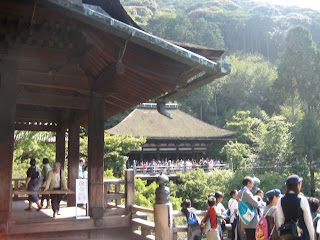

Finally seeing traditional Japanese architecture, you can understand how so many architects are inspired by it. The use of layers, boundaries and sense of perception and approach are outstanding.

Shisendo

Shiragamo Shrine

Ando - Times Building


Kiyomizu Temple
Wednesday, October 13, 2010
Spacial Investigation
Here are the original collages that were part of project 1, better late than never

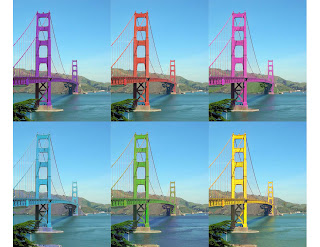


color


movement


passage through time


this went from passage of time to light and shadow
soo a change of plans..
after doing more research, I have decided to change my topic. here are my new idea map and visual abstract. New written abstract soon to come, still trying to create something more specific.
using time based architecture and flexibility of form to create series of experiences for numerous users.


using time based architecture and flexibility of form to create series of experiences for numerous users.


Wednesday, September 29, 2010
First iteration
Thesis Abstract - the first attempt of many......
Perception of Color in Architecture
Color in architecture magnitude has varied throughout history. Color is not just the Benjamin Moore paint chosen; it is a variable in design that affects the quality of the designed space. From cities to facades to an individual space, color affects experience. Color is not a superficial element but a factor in design.
Certain colors have specific associations to everyday parts of our built environment. From the red fire station to the color of the Southwest’s adobe homes, color is part of history. Color has been used with specific agendas to create a conscious and or subconscious affect on people. Color is tied to memory, emotions and consequently actions. Understanding color allows for the opportunity to mold an experience.
Color in architecture can be determined by materiality. The color and texture of a material creates depth to a space. The way that light hits a material, it can highlight parts that potentially could have been overlooked. Color is a factor, along with materiality and light, in creating that experience that evokes a reaction.
Color in architecture is not just materiality but in the opportunity color allows to play with perception. The building façade of Museum Brandhorst in Munch, Germany plays with the use of scale. During the precession to the building, the color of the façade creates a mental interaction for the viewer. From afar the pastel panels blur together to have a simple coating over the pieced together volumes. Up close, the panels start to pull apart, differentiating in color and creating a rhythm through the façade. Color changed its appearance because of how it is viewed.
The implication of color is that it is not just an aesthetic property, but also an ability to create a sensory overload. Color works with form, materials, and humanity to create a reaction, memory and experience.
Things I Can't live Without - the never ending list
So far as I stumble on things I post them on this blog, but there is so much that ends up being overlooked. In making this list, I hope to give a better idea. Some topics are broad some are specific. This list is in no specific order and always being changed
Manhattan - Soho
Isabella Stewart Gardner Museum
The Yankees
ICA
Carlo Scarpa
Castelvecchio, Verona, Italy
Florence, Italy
Music - musicals, Queen, Florence and the Machine, Lydia
Alexander McQueen
Paris at night
MOMA
colors
Chuck Close
Norman Foster
Mad Men
Early 60s fashion
Barbra Streisand - Funny Girl - The Way We Were
"If you want to be irreplaceable, you must be different" Coco Chanel
Met Costume Gala - fashion
New York Fashion Week
London
Tadao Ando - Punto Della Dogana, Venice, Italy
Shepard Fairey
dezeen.com
Marc Jacobs
M.A.C. Cosmetics
OMA
photoshop
ephemeral
to be continued...
Manhattan - Soho
Isabella Stewart Gardner Museum
The Yankees
ICA
Carlo Scarpa
Castelvecchio, Verona, Italy
Florence, Italy
Music - musicals, Queen, Florence and the Machine, Lydia
Alexander McQueen
Paris at night
MOMA
colors
Chuck Close
Norman Foster
Mad Men
Early 60s fashion
Barbra Streisand - Funny Girl - The Way We Were
"If you want to be irreplaceable, you must be different" Coco Chanel
Met Costume Gala - fashion
New York Fashion Week
London
Tadao Ando - Punto Della Dogana, Venice, Italy
Shepard Fairey
dezeen.com
Marc Jacobs
M.A.C. Cosmetics
OMA
photoshop
ephemeral
to be continued...
Subscribe to:
Posts (Atom)